About High Temperature Bogie Hearth Furnace
High Temperature Bogie Hearth Furnace
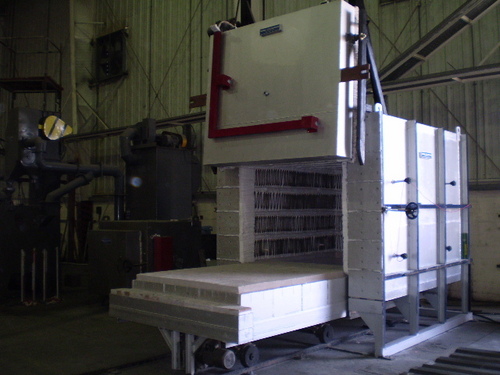
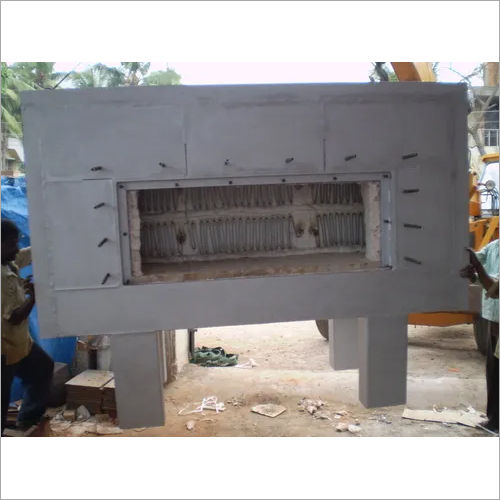
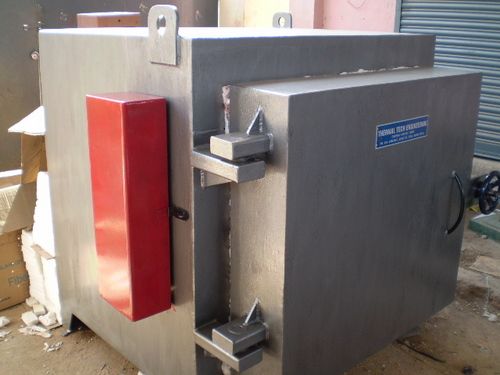
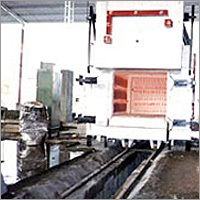
Taking our massive proficiency and experience into consideration, we are marked as the foremost manufacturer and supplier of High Temperature Bogie Hearth Furnace. This hearth furnace is manufactured as per api6a annex p 2008 standard by using the premium quality material and innovative techniques. To make it user friendly and ensuring high performance, High Temperature Bogie Hearth Furnace is accomplished with PLC control, thyristor control panel and software recording facilitation.
Features:
- Bogie and door are motorised
- Low operational cost
- Optimum rigidity
Technical Specification:
| Heating Mode | Oil, Gas and Electric |
| Temperature | upto 1200oC Oil & Gas
upto 1800oC Electric |
| Capacity | upto 100 Tons for Oil & Gas
upto 10 Tons for Electric |
| Type 1 | Upto 20 Tons for Moving Furnaces |
| Type 2 | 1Ton to 100 Tons Bogie Hearth |
Customizable Power and CapacityThis furnace accommodates a wide range of operational needs, offering custom sizing, optional fuel sources (electricity, gas, or oil), and capacity configurations up to 100 tons. Whether you require compact units or large-scale installations, our flexible manufacturing ensures flawless integration with your specific process workflows.
Advanced Heat Treatment FeaturesEngineered for high temperature durability, each furnace features programmable controls and uniform heating. The advanced technology ensures precise, repeatable cycles for critical industrial processes like annealing, hardening, and stress relieving, optimizing material properties and enhancing productivity.
Applications Across IndustriesDesigned to serve industries such as forging, foundry, steel plants, and alloy processing, this versatile furnace supports a broad range of heat treatment operations. Its reliable performance addresses the unique demands of various sectors, delivering consistent results and operational efficiency.
FAQs of High Temperature Bogie Hearth Furnace:
Q: How does the High Temperature Bogie Hearth Furnace ensure uniform heating throughout the chamber?
A: The furnace is engineered with advanced heat distribution systems and programmable controls, which work together to maintain consistent temperatures and uniform heat transfer across the entire load. This uniformity is essential for reliable results in heat treatment processes such as annealing and hardening.
Q: What customization options are available for the size and capacity of the furnace?
A: Both size and capacity can be fully customized according to client specifications, with options available up to 100 tons. Standard models exist, but most furnaces are tailored to match individual operational needs and space constraints, ensuring seamless integration into existing facilities.
Q: When is it most beneficial to use a bogie hearth furnace in industrial processes?
A: Bogie hearth furnaces are ideal whenever large, heavy, or oddly shaped loads require precise heat treatment at high temperaturescommonly during forging, foundry, and alloy processing operations where uniformity and efficiency are critical.
Q: Where can the furnace be installed, and what are the site requirements?
A: Furnaces can be installed in various industrial environments, such as forging plants, steelworks, and alloy production facilities. Installation requires suitable electrical or fuel connections, proper ventilation, and adequate floor space as per the chosen size and configuration.
Q: What are the primary steps involved in operating the furnace for heat treatment processes?
A: Operation involves loading the material onto the bogie, setting the desired program using the control system, and initiating the heating cycle. Programmable controls manage ramp-up, hold, and cool-down phases, ensuring accurate process execution for desired material properties.
Q: How does choosing this furnace benefit my industrial heat treatment operations?
A: This high temperature bogie hearth furnace delivers several benefits: improved process precision, energy efficiency, adaptable capacity, and dependable performance at temperatures up to 1350C. These features lead to higher throughput, lower operational costs, and consistent product quality.










 Send Inquiry

 Send Inquiry



